20 mai 2026
Marie-Pier Champagne, nouvelle membre du Bureau de direction
18 mars 2026
Jia Yu (membre étudiant, doctorat en ATDR) a participé au 9th Spatial Knowledge and Information (SKI), colloque qui s’est tenu du 19 au 22 février 2026 à Banff. Ce colloque rassemble des chercheurs et chercheuses en science de l’information géographique, en science des données spatiales et d’autres disciplines connexes. Jia y a présenté une communication intitulée: Do Bike Lanes Reduce Collisions? Measuring the Causal Impact of Bike Lane Implementation on Road Safety in Montreal (2005-2024).
La participation de Jia à cet événement a été soutenue par une bourse de rayonnement du CRAD, bourse qui finance la participation des étudiantes et étudiants membres à des événements scientifiques où ils peuvent présenter les résultats de leurs travaux.
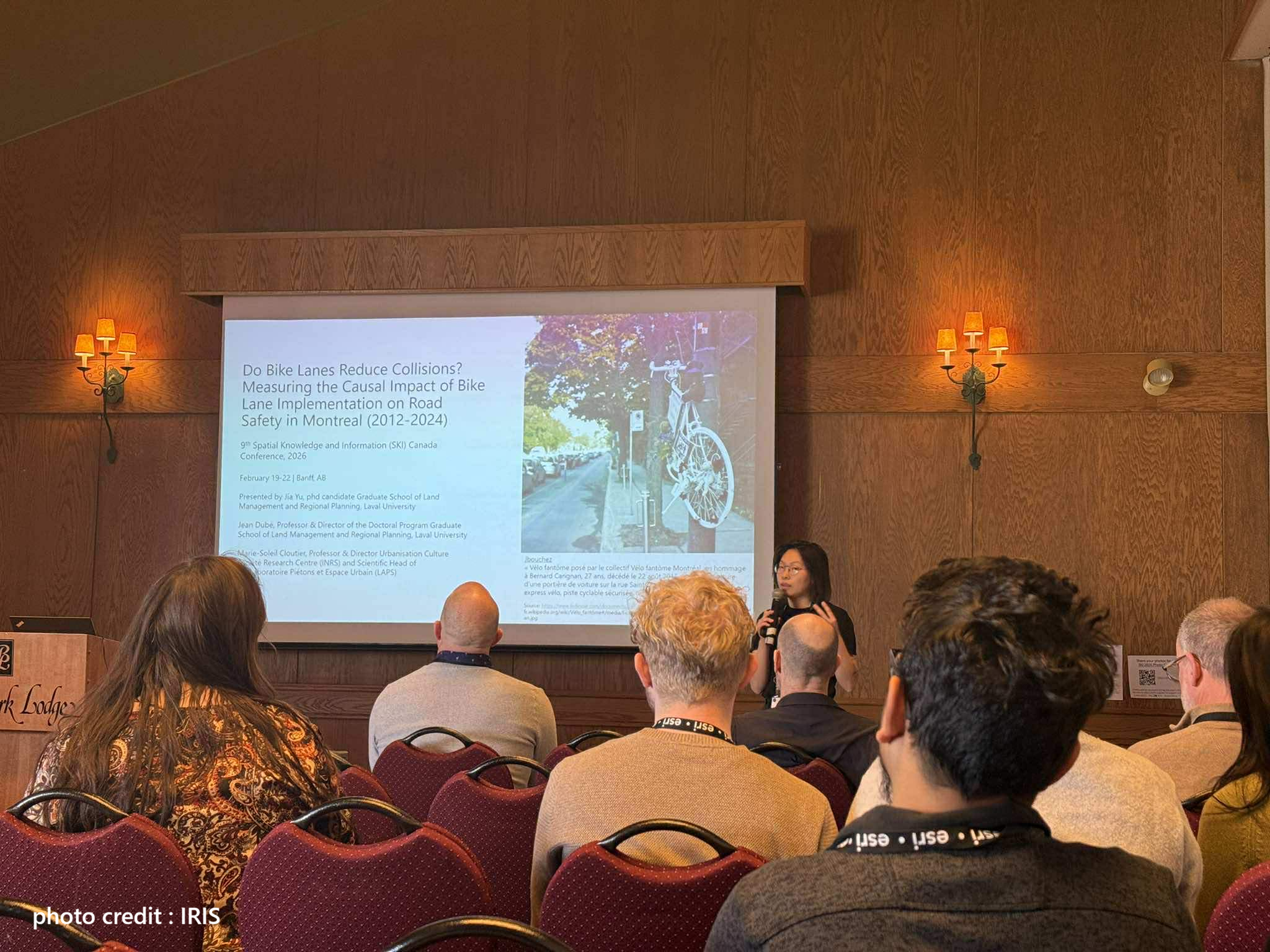
Résumé de la communication de Jia :
Cyclists are vulnerable road users because they must frequently share the same infrastructure with motorized vehicles. The built environment, such as inadequate or unsafe cycling infrastructure and land use that discourages cycling, affects both cycling rates and injury risk. This suggests that improving transportation infrastructure provides a tangible way to reduce accidents involving cyclists. In recent years, many cities have invested in human-scale mobility infrastructure such as expanded bike lanes and pedestrian corridors. This shift has been accelerated by the mobility shifts following COVID-19. However, despite an increasing emphasis on active transport, municipalities are still lacking robust evidence of whether and how street redesigns impact road safety. Despite the rapid expansion of cycling infrastructure in North American cities, such as Montreal, the long-term safety impacts of bike lane implementation—particularly beyond isolated corridors—remain insufficiently documented. This project addresses this gap by assessing whether the installation of bike lanes in Montréal contributes to measurable reductions in road collisions.
Using a quasi-experimental (event study) design, the research leverages the staggered rollout of bike lanes between 2005 and 2024 to estimate the dynamic, time-varying effects of the impact of bike lane implementation on collision counts. The analysis draws on geocoded collision records from the city of Montréal and detailed annual bike-lane implementation data provided by the city of Montreal between 2005 and 2024. The main assumption is that road reduction has significant and positive impact on decline in total collisions in the years following bike lane implementation for the entire island. Using heterogeneity analysis, we also assumed that stronger reductions are expected in central, dense, and mixed-use neighborhoods where cycling activity is higher.
The results will give municipalities clearer evidence on whether bike lane implementation influences collision trends, helping them assess whether recent investments in cycling infrastructure are achieving their intended safety outcomes. By identifying where and under what conditions safety gains are most likely to occur, the study will support more informed decisions about future expansions of active-mobility networks.